Shed Disposal, planned from the gate inward.
Loading and disposal planning for shed materials that have already been taken apart.
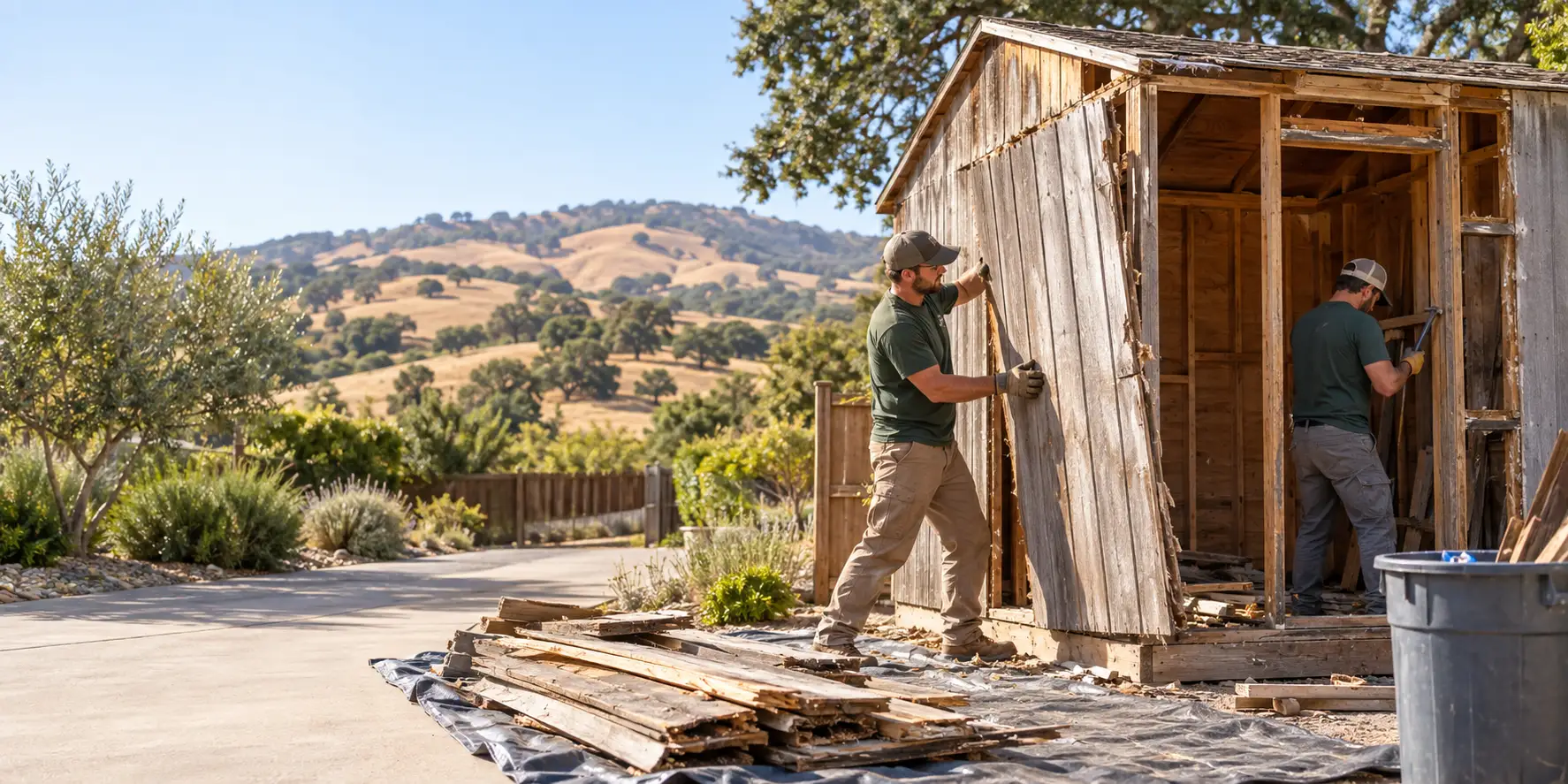
What this service can cover
Manageable loads of non-hazardous wood, metal panels, roofing, fixtures, and similar shed debris.
Scope boundary
Concrete, soil, chemicals, fuel, paint, batteries, and suspected asbestos-containing materials require separate review or an approved disposal route.
- Photographs of the structure from more than one side
- Approximate dimensions and material
- Narrowest gate, stairs, slope, and carrying distance
- Anything attached, powered, plumbed, buried, or set in concrete
See the work area clearly
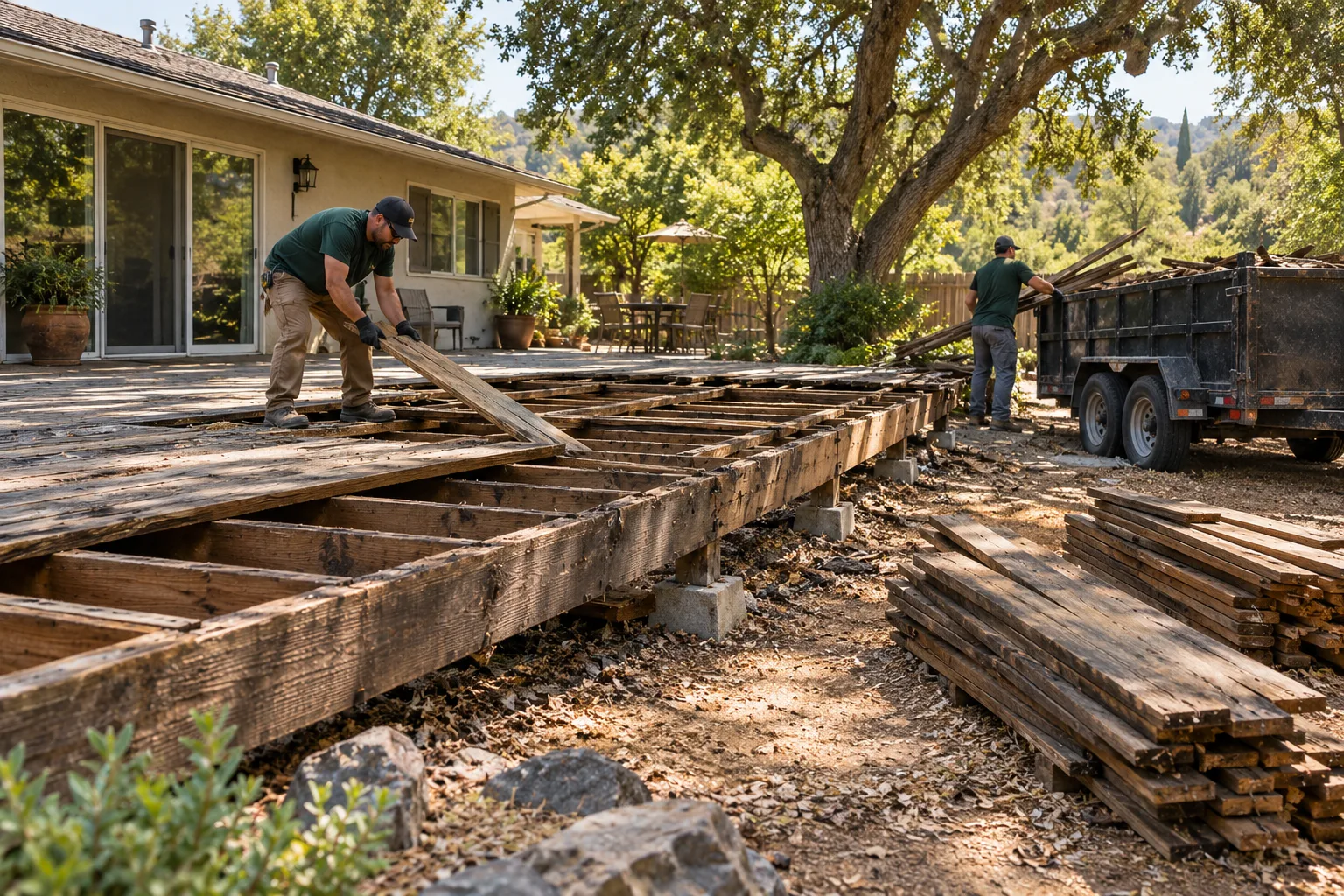
What affects the estimate
Labor, material, volume, weight, access, anchors, utilities, and the condition of the structure all matter. Describe brittle, rotten, rusted, or fire-damaged material before the visit.
A question to settle early
Can every shed material go in one load?
Not always. Concrete, soil, hazardous products, batteries, pressurized cylinders, and suspected asbestos-containing material can require separate handling.
Will the crew take hazardous material?
No. Paint, fuel, oil, pesticides, batteries, medical waste, pressurized containers, and suspected asbestos-containing material need a separate approved disposal path.
Should I obtain a permit?
Permit needs depend on the structure, site, and local jurisdiction. Confirm requirements with the responsible authority before work begins.
Read the preparation guide: What happens to old shed materials after removal?
Need a shed disposal scope?
Have the shed material, approximate size, access route, and utility status ready. Those details make the first conversation useful.
Call (202) 555-0122