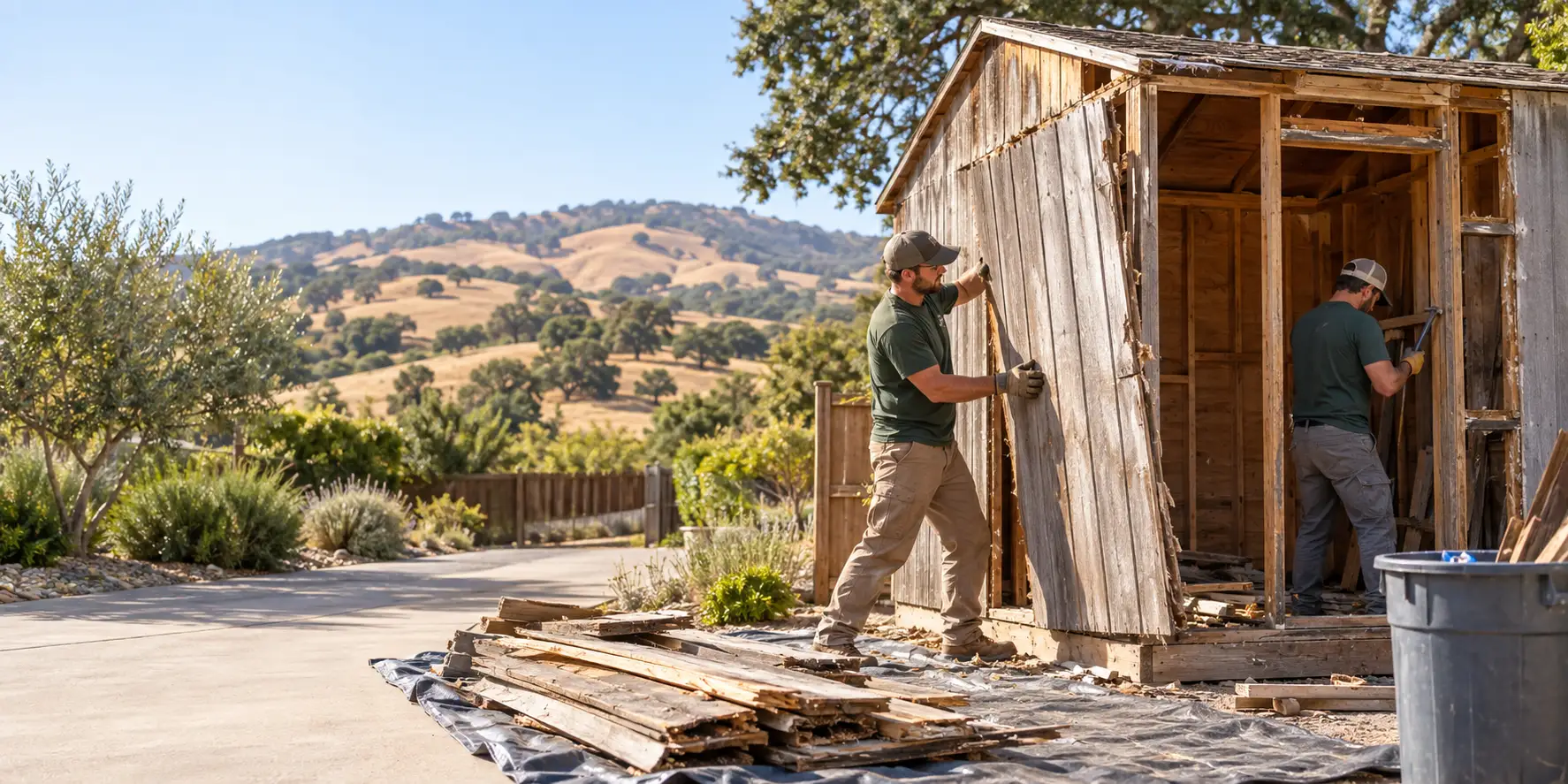
Look for instability, rot, damaged roofing, exposed nails, and suspect materials without entering an unsafe structure. The goal is a clear scope, not a rushed teardown.
Assess from a safe distance first
A leaning wall, sagging roof, soft floor, or door that no longer closes can signal instability. Do not enter or pull on the structure to test it. Take photographs from several safe angles and describe what has changed.
Show the crew the roof and siding
Note missing shingles, brittle panels, peeling coatings, water damage, and vegetation growing through the structure. Suspected asbestos-containing roofing or siding needs a qualified assessment and approved handling.
Expect hidden sharp edges
Weathered boards can split around rusted nails and screws. Keep people and pets away, avoid stacking loose pieces in walkways, and tell the crew where collapsed or partly detached sections are located.
Document the base and access
Photograph skids, blocks, anchors, concrete, and soil contact. Include the full path to the loading area so section size and carrying distance can be planned.
Use this decision table
| Check | Why it affects the job |
|---|---|
| Connections | Utilities and building attachments must be made safe before dismantling. |
| Below grade | Anchors and concrete may add weight, digging, and a different disposal route. |
| Access | Gates, turns, stairs, slopes, and carrying distance control section size and labor. |
| Materials | Hazardous or regulated material cannot travel in an ordinary debris load. |
Checklist to keep
- Leaning or sagging areas photographed
- Roof and siding materials identified
- Rot, fire damage, or collapse disclosed
- Suspect material left undisturbed
- Base and anchors visible
- Safe carrying route documented
Review the wood shed removal service scope, then prepare the information for an estimate. A call or inquiry does not confirm an appointment.